How to Practise English Speaking Every Day Without Spending a Single Dollar
🎙️ Stop reading and start speaking! Study live with Toby, our free AI English Tutor on Telegram.
Somebody once told me that you need to spend money to speak English well. Expensive classes. Fancy apps with monthly fees. A tutor who charges by the hour. I believed that for years. And I wasted a lot of time waiting until I could “afford” to get better.
Turns out, that’s completely wrong.
You don’t need to spend a single rupee — or dollar — to practise English speaking every day. What you actually need is a habit, a little creativity, and the willingness to feel slightly embarrassed for about two weeks. After that? It gets easier than you think.
Why Most People Never Actually Speak English
Here’s the honest truth. Most people who “study” English spend 90% of their time reading and writing. They learn grammar rules. They memorise vocabulary lists. And then someone asks them a question in English and they freeze up like a broken fan in July.
Speaking is a physical skill. Like riding a bike. You can read about balance all you want, but until you actually sit on the bike and fall off a few times, you’re not going anywhere. The only way to get better at speaking is to speak — a lot, and often.
So why don’t people do it? Simple. They’re scared of making mistakes in front of others. And they think they need money to find a “safe” space to practise.
You don’t. Let me show you what actually works.
Talk to Yourself — Seriously, Do It
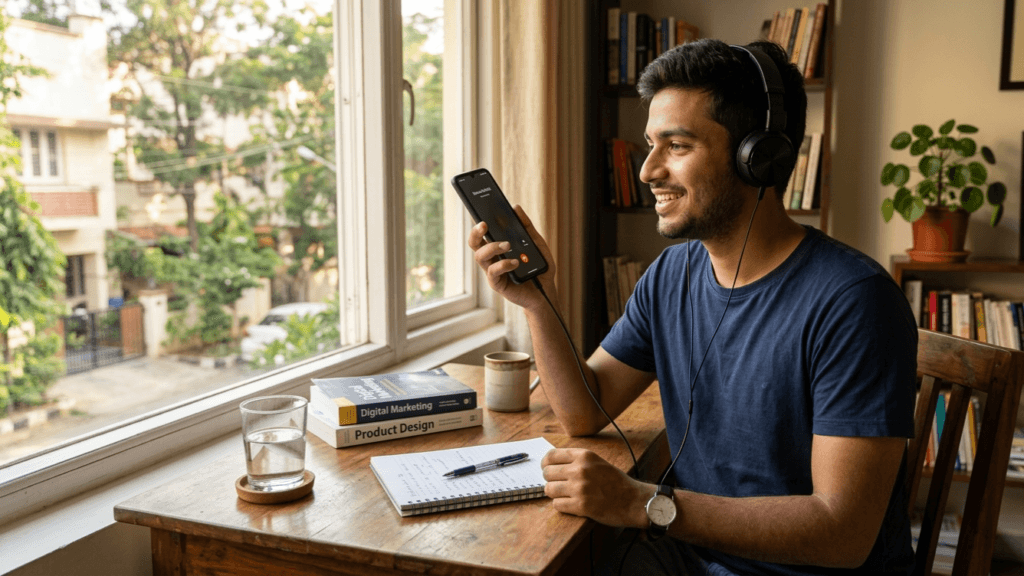
I know. It sounds a little odd. I remember the first time I tried this — I was narrating my morning routine out loud in English while making chai, and my mother walked in and asked if I was on a call. I wasn’t. I was just talking to my own kitchen.
But here’s the thing. Talking to yourself in English is one of the most underrated free tools out there. Describe what you’re doing. Narrate your day like you’re a character in a TV show. When you’re walking to the shop, think in English. When you’re deciding what to eat, say it out loud.
This does something powerful. It trains your brain to think in English rather than translate from your native language. Roughly 80% of the delay people feel when speaking English comes from that translation step in their head. The more you think and speak directly in English, the faster that delay shrinks.
Do this for just 10 minutes a day. That’s it.
Use Free Content as Your Speaking Partner
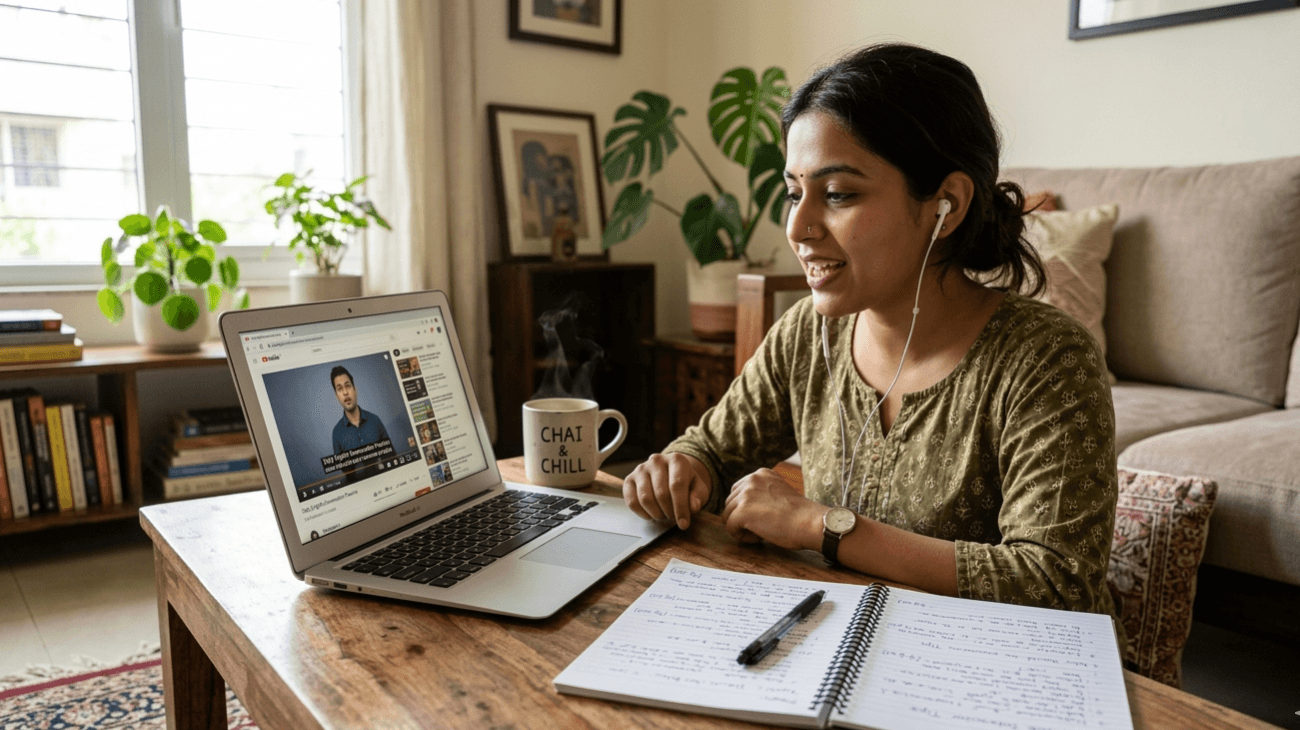
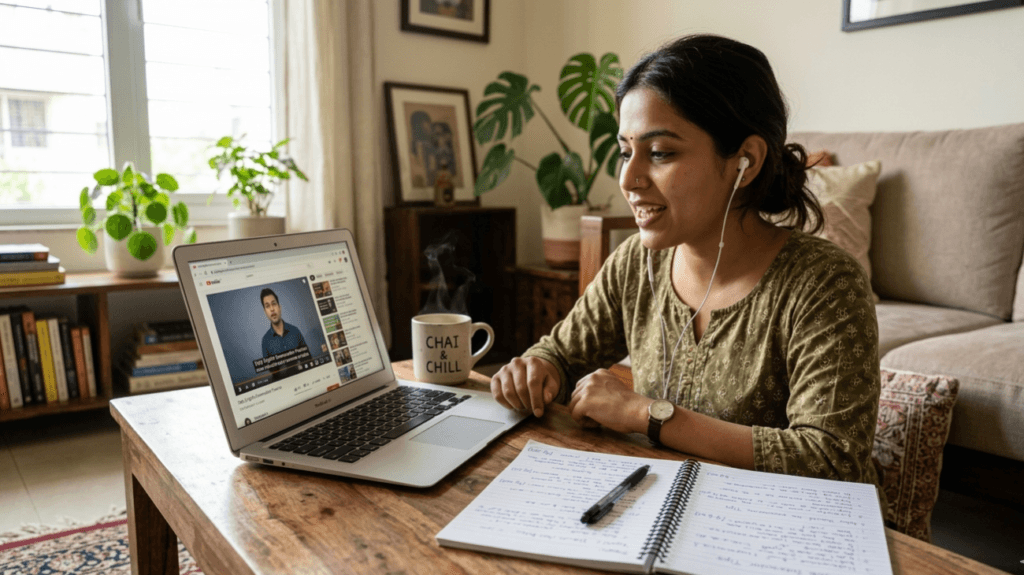
YouTube is full of English content — interviews, podcasts, TED Talks, vlogs. But most learners just watch passively. Try this instead: shadow the speaker.
Play a sentence. Pause. Repeat it out loud, copying the exact rhythm and pronunciation. Then play the next one. This technique is called shadowing, and language researchers have used it for decades. It works because you’re not just hearing English — you’re physically practising how it sounds coming out of your own mouth.
Start with speakers who talk at a natural but not too-fast pace. I personally liked cooking videos when I started — the vocabulary is simple and the hosts speak clearly. “Best YouTube Channels for English Listening Practice“
Do this for even 15 minutes a day and you’ll notice a real difference in your fluency within a month.
The “One Topic a Day” Method
Here’s a simple thing I started doing that changed everything for me. Every morning, I’d pick one topic — could be anything, football, my favourite film, what I ate for dinner last night — and I’d give myself a two-minute “speech” about it. No script. No preparation. Just talk.
The first few times were painful. I’d fumble. Go silent. Lose the word I wanted. But that’s the point. Real conversations are messy, and you have to practise being okay with the mess.
After a few weeks, I noticed I could talk for two minutes without stopping. Then five. Then I started actually enjoying it. Have you ever tried something like this? Even once, just for fun? If you haven’t, try it tomorrow morning. You might surprise yourself.
What Most People Get Wrong About Speaking Practice
Here’s where I’ll say something a bit unpopular. Lots of advice says you need a “language exchange partner” — find a native speaker, chat with them, everyone benefits. And look, it’s not bad advice exactly. But honestly? For beginners and intermediate learners, talking to native speakers too early can actually slow you down.
Why? Because you spend the whole conversation stressed. You’re worried about embarrassing yourself. You can’t keep up with their natural speed. You go quiet, they try to help, and you leave feeling worse, not better.
I think it’s far more effective to build confidence alone first — through self-talk, shadowing, and AI tools — and then bring in human conversation partners once you already have a base. Think of it like warming up before a match. You don’t start cold and jump into the game.
This Is Where Toby Changed Things for Me
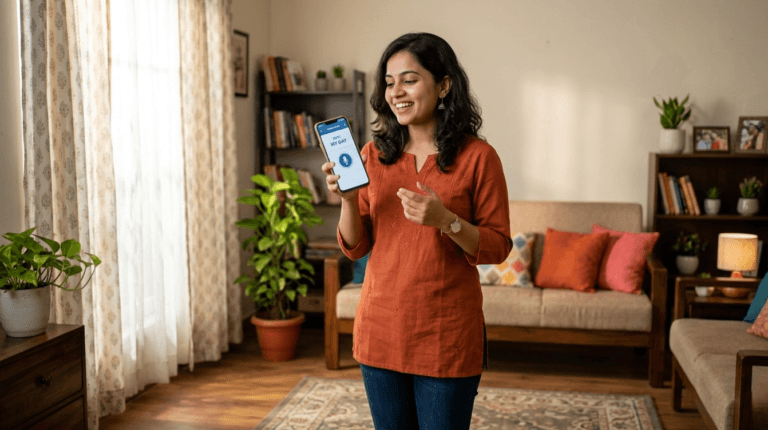
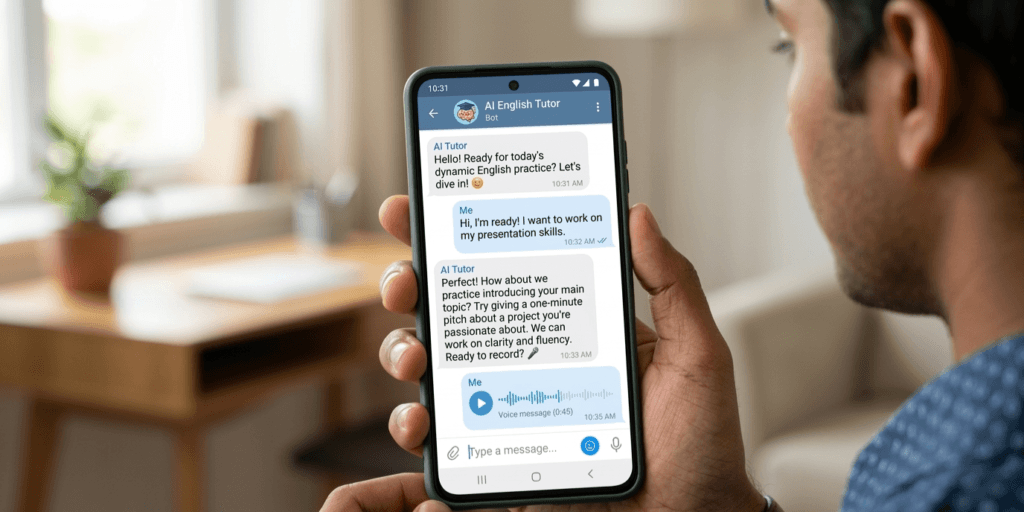
When I first found Toby, I wasn’t expecting much. It’s an AI English tutor that lives right inside Telegram — which I already had on my phone — so there’s zero friction to start. What surprised me was how much it actually felt like a real conversation. Not a quiz. Not a textbook exercise with blanks to fill. An actual back-and-forth.
Toby has voice practice so you can speak and get feedback, roleplay scenarios where you practise real situations like job interviews or ordering food, and even IELTS prep if that’s something you’re working toward. There’s a free tier you can start with right now, no card needed. If you’re serious about improving, the premium plan goes much deeper. You can find it at t.me/@TalkToToby_bot — it takes about 30 seconds to get started.
You Already Have Everything You Need
So let’s bring it together. Practise English speaking every day for free — here’s the honest version of how that actually looks.
Talk to yourself in the morning. Shadow one YouTube video at lunch. Pick one topic and speak about it for two minutes before bed. Use a tool like Toby when you want real interaction without judgment. That’s it. That’s the whole system.
No classes. No expensive apps. No waiting.
The only thing standing between you and better English is 20 minutes a day and the decision to actually use them. And you know what? If I could go from freezing up every time someone spoke to me in English to genuinely enjoying conversations — trust me, you can too.
So tell me — what’s the one thing that’s stopped you from practising English speaking every day? Think about it. Then go do it anyway.